
By Bibendum
Prologue
A couple of years ago I was in Brindisi waiting for a ferry to Greece and struck up a conversation with an Italian who asked me if I had ridden Portugal’s “Route 66”, the N2. I think some of the conversation was lost in translation, as he explained that you could get a passport for the route, but it piqued my interest. When, earlier last year a tour to Morrocco was in the planning, I mentioned this conversation to my buddy Pete regarding the Italian who had extolled the virtues of the N2. Subsequently, I read somewhere that there are only 3 routes in the world, under a single National Road designation, that bisect their countries: the USA’s famous Route 66, Argentina’s Ruta 40, and the N2 in Portugal. There are other longer “highways” such as in Canada and Australia, but these are networks made up of several different road designations.
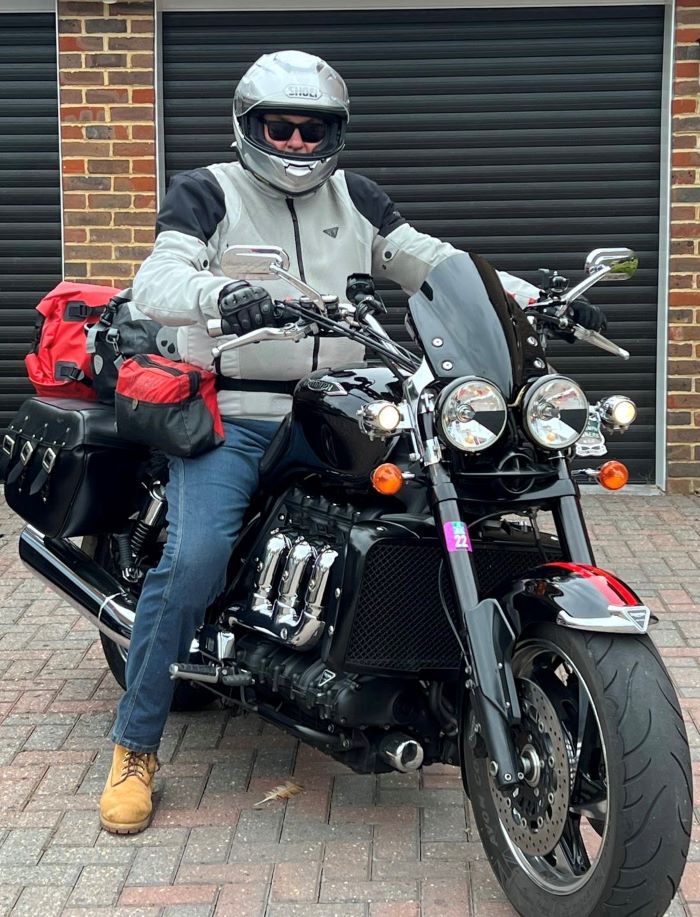
So, in September 2023 my long-time touring companion Pete and I set out for Morocco; 2 days after the earthquakes had hit Marrakech. He, on a year-old Yamaha Tracer 9GT and me on, Mercury, my 10-year-old Rocket Roadster.
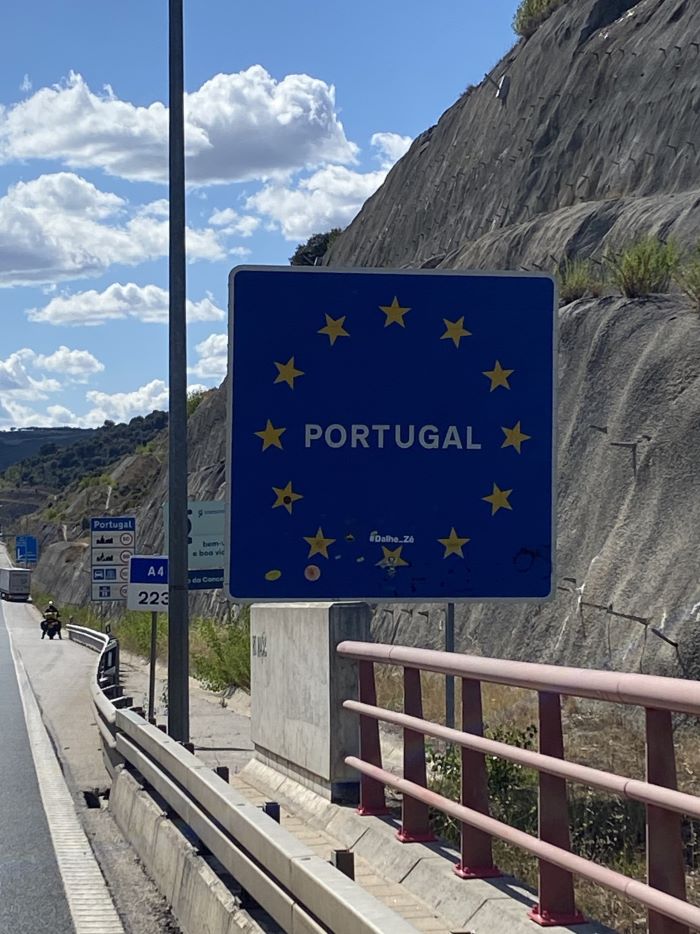
We had planned for months, already booked our crossing from Plymouth to Roscoff and we were going, earthquake or not. We figured that by the time we had reached Marrakech, the cleanup would be well underway. Anyway, we would not be heading directly to Morocco, first we had to divert to Portugal and ride the N2. It’s the shortest of the 3 renowned roads at only 738 km (459 miles), but it is regarded as Portugal’s “Route 66”. Starting in the north at Chaves, it finishes in the southern city of Faro. Our route from when we arrived at Roscoff was to avoid all toll roads and we made night stops in La Rochelle, France, onto Pamplona, Spain and finally Braganza where we reached the Portuguese border.
Day 1
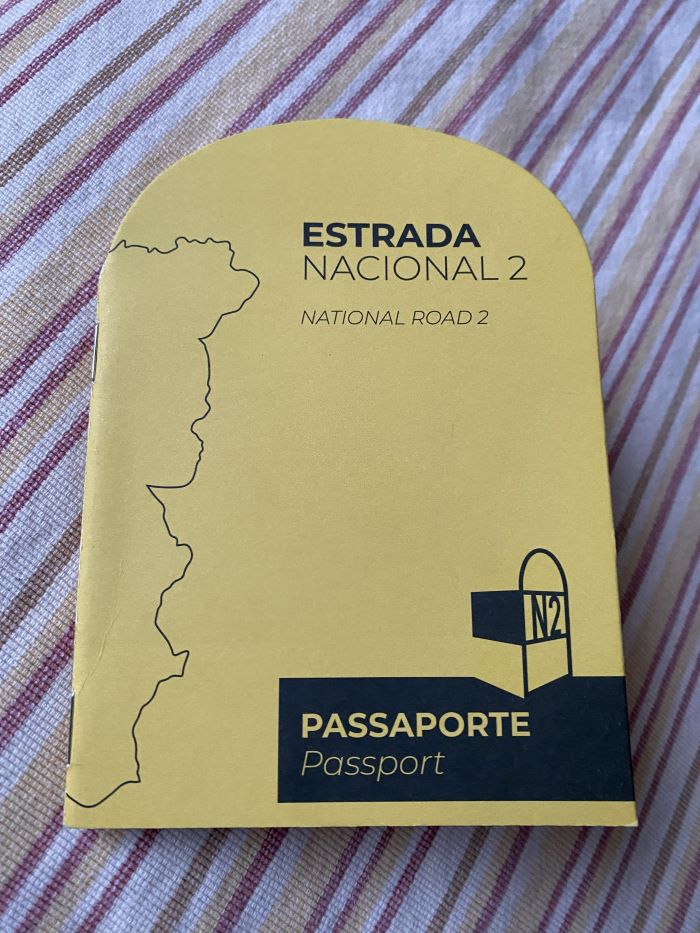
Heading for Chaves early next morning from Braganza, we had a pleasant ride, narrowly missing an isolated downpour that luckily, we only saw in the distance. When we reached Chaves, we needed to locate Tourist Information to obtain N2 “passports”. These are yellow soft-backed booklets, in the shape of the N2 marker stones and have a page for each of the official stops where the “passports” can be stamped. There are 35 stops with corresponding pages; some of these points drift off the N2, but eventually return you to the route again. A QR code on each page directs you to Google Maps, so it’s impossible to get lost, well in theory…
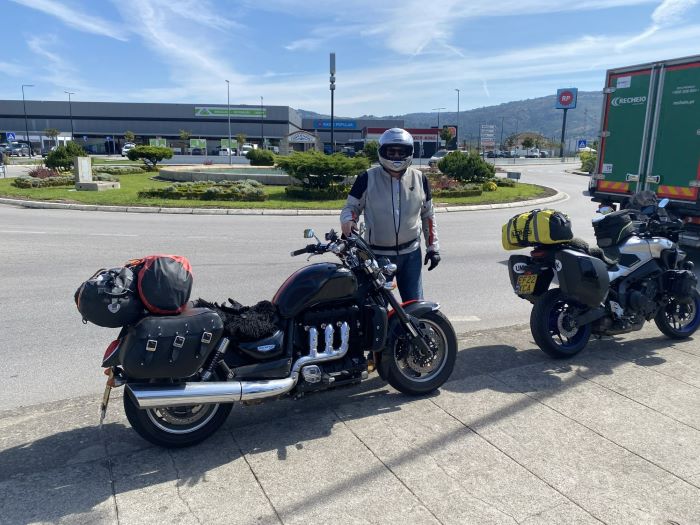
Our first problem was that we couldn’t find the Tourist Information office, with our Sat-Navs sending us around in circles. Stopping in a parking bay next to a Moto Guzzi V85TT, I dismounted and commenced a conversation with the rider. Pete had owned one of these and I had always liked this model. Eventually, after discussing the Guzzi at length, I mentioned our predicament regarding the Tourist Information office. “No problem, follow me”, he said and good to his word we followed him to the Tourist Information office and acquired a couple of N2 “passports” (FOC), had them stamped and set off on our way.
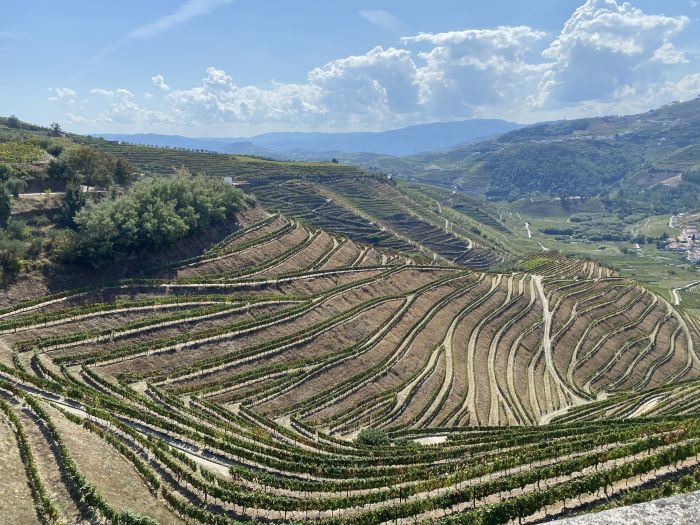
Our first thoughts of the N2 were that the views were spectacular, but the landscape had obviously been ravaged by fires during the summer that had taken place in so many European countries. Not Britain of course, it seemed that it had been raining constantly since the end of June! The scorched hillsides went on for miles and were clearly visible. However, as we travelled further south the blackened trees were replaced by vineyards, terraced into the hillsides and such a glorious sight. The grape harvest was well underway and we had to negotiate dozens of pick-up trucks full of grapes and the smell of fermenting fruit filled the air as we passed the wineries.
We later met with the first of many diversions on the N2 but were soon headed for our digs for the night in Viseu, booked a couple of hours earlier on Booking.com.
Day 2
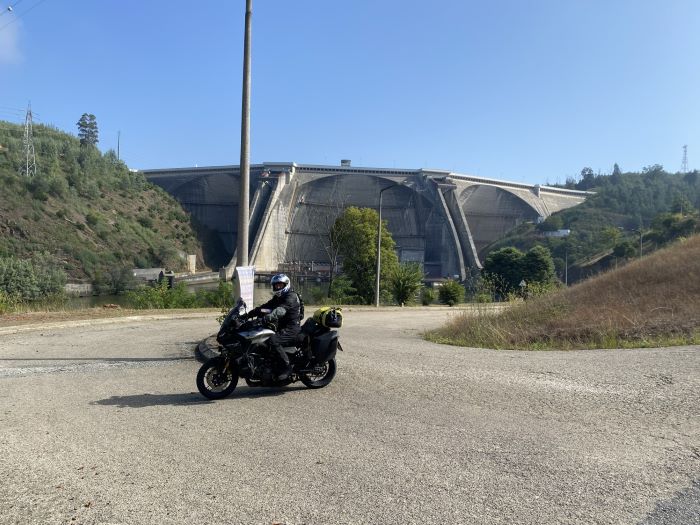
The following day we were back on the N2, but the road signs left a little to be desired and we got lost several times. (We actually strayed onto a toll road, unbeknown to us, until we both received fines for not paying the toll charge, in March this year). The stunning scenery continued and we eventually discovered where we’d gone wrong and were soon back on the N2. The vineyards had been replaced by sweet chestnut trees, then it was back to vineyards and then a mixture of cork, olive and agave. Huge dams and incredibly high bridges spanned the barancos.
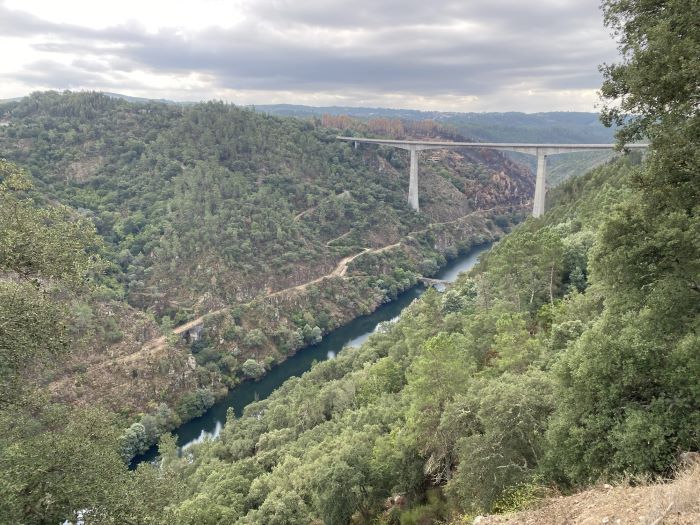
Just before the halfway point of the route, the road changed, it became wider, the turns were not so tight and there were no more hairpins. Overall average speed increased because the hills had turned to plains, it was noticeably warmer too. The bad weather forecast for the day turned out to be a few spots of rain and we were hot in our waterproofs. Mid-afternoon it was time to look for a room for the night, which we booked in Evora. This meant a diversion off the N2 by 20 miles, but we would return the next day and pick up where we left off.
Day 3
When we left Evora in the morning it was raining heavily, this lasted for about an hour and a half, at which point we removed our waterproof jackets. I then realized that I had lost an over-glove and Pete waited while I rode back 7 miles to see if I could find it, but to no avail.
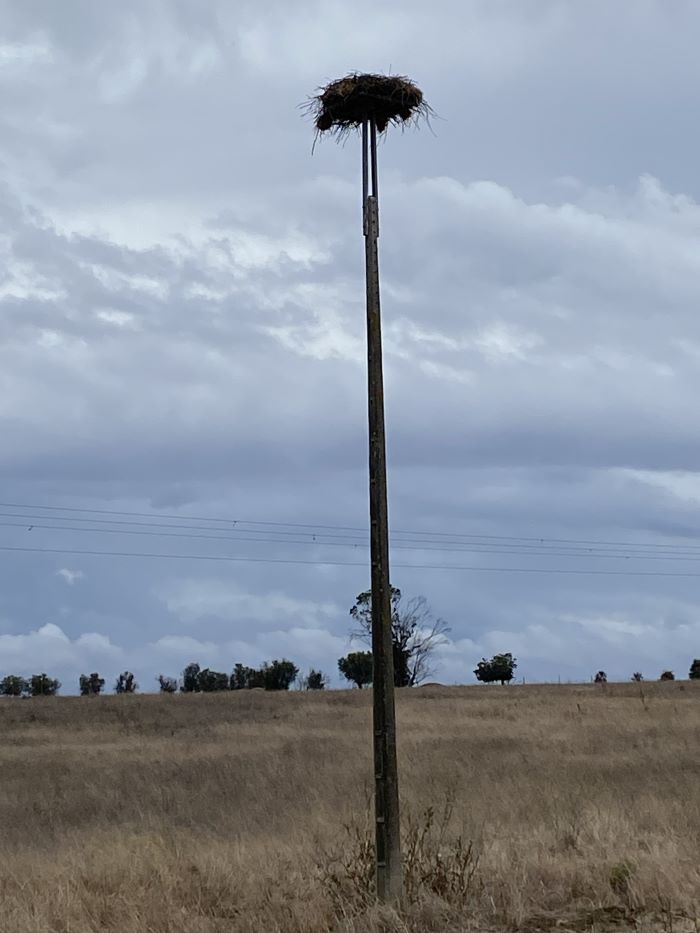
I noticed high posts along the route with large nests atop. These are of the White Storks of the Algarve. Further along, Pete ahead of me, his bike put up a bird in the road and I immediately shouted over the intercom “Hoopoe!” Pete was completely oblivious to the identity of said bird and I remarked “I’ll show you a picture of one when we stop…” When I showed him a picture on Google, he confirmed nonchalantly “Yeah, that was it”.
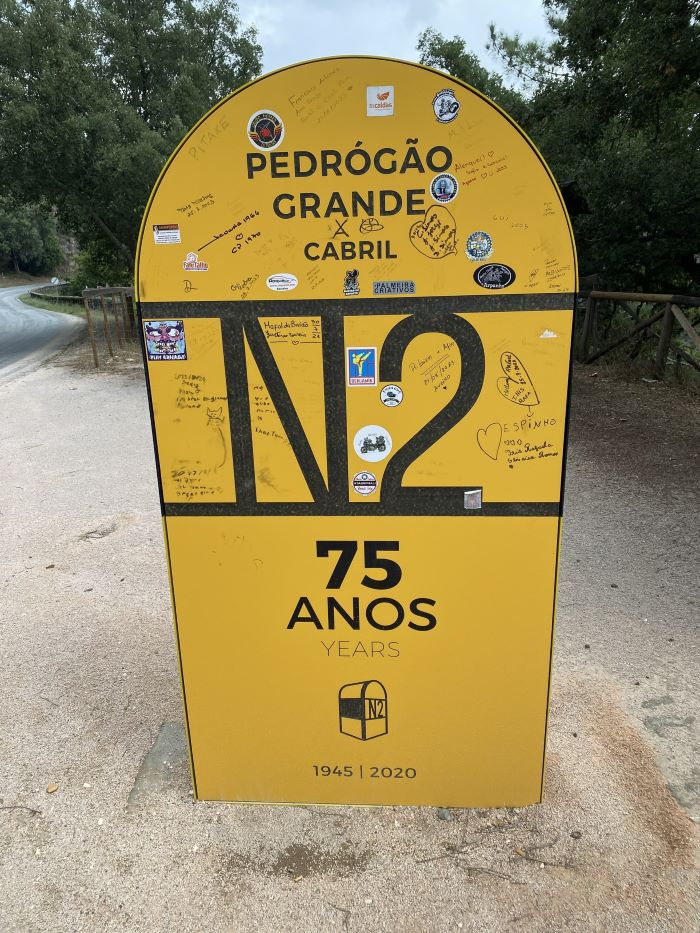
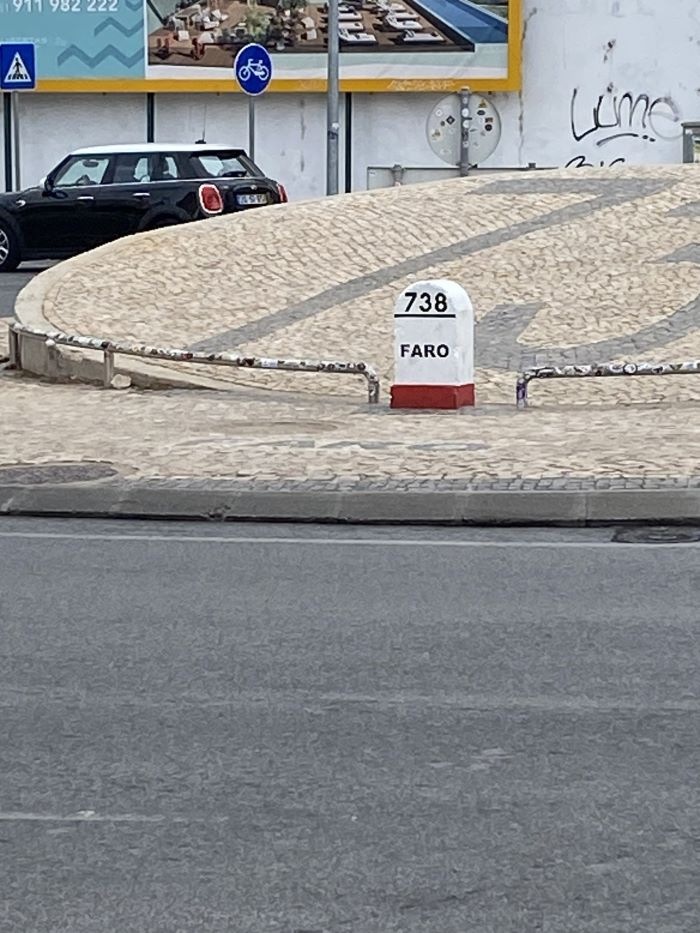
We encountered more rain in the hills above Faro, but it didn’t come to much and we finally reached the Faro marker stating 738 km. A final stamp in the passport and it was done. We booked a room for the night, but it was an hour away in Vila Real de Santo Antonio, right on the Portuguese/Spanish border and we arrived there just before 6.00 pm.
Epilogue
Ours was a “whistle-stop” tour along the N2. We covered it in about 2.5 days. It warrants twice that time especially if you want to collect all the stamps in your N2 “passport”, which we certainly did not manage. The reason that we only had 3 days in which to reach Faro from Braganza was that 2 days later our wives were flying to Tangier to meet us; before we toured Morocco. Of those 5 proposed days though, I would suggest that a greater period of the time was spent in the northern half of Portugal. Once you lose the hills and terraces, the scenery of the southern part lacks impact, it turns to plains. However, the roads are faster and thus you’ll be covering more ground in the same time.

Finally, and I know some of you will be shouting “you haven’t even mentioned the N222”. So, if you have more time divert at Peso de Regua and ride the 27km along the Douro River to Pinhao and back to the N2, or continue on for Porto. It’s purported to be one of the finest driving roads in the world. Again though, add a couple of days to allow a return journey back to continue along the N2, Portugal’s “Route 66”.
The above article first appeared in Nacelle, the Triumph Owners Motorcycle Club magazine, in 2025.